


Over six drives between Oct 23 and 26, 2026, three photographers and one mentor found eight tigers in Panna Tiger Reserve, Madhya Pradesh, India: two dominant males, a tigress with three cubs, and two more tigresses on separate drives. This Panna Tiger Reserve trip report covers each sighting and what we worked on in the field.
Why Panna Tiger Reserve photographs differently
Panna Tiger Reserve doesn't look like the classic jungle. It is a land of gorges, teak plateaus, open grasslands and waterfalls along the Ken River, and for photographers that variety is the gift. Every drive offers a different backdrop, a different light, a different story.

The reserve lies in Madhya Pradesh, in central India, and Khajuraho is the nearest airport. This is also a place with a remarkable history. Panna lost its tigers entirely in 2009.
Today, thanks to an extraordinary reintroduction and protection effort, it is one of India's most compelling conservation comebacks, and you can feel that in every sighting.
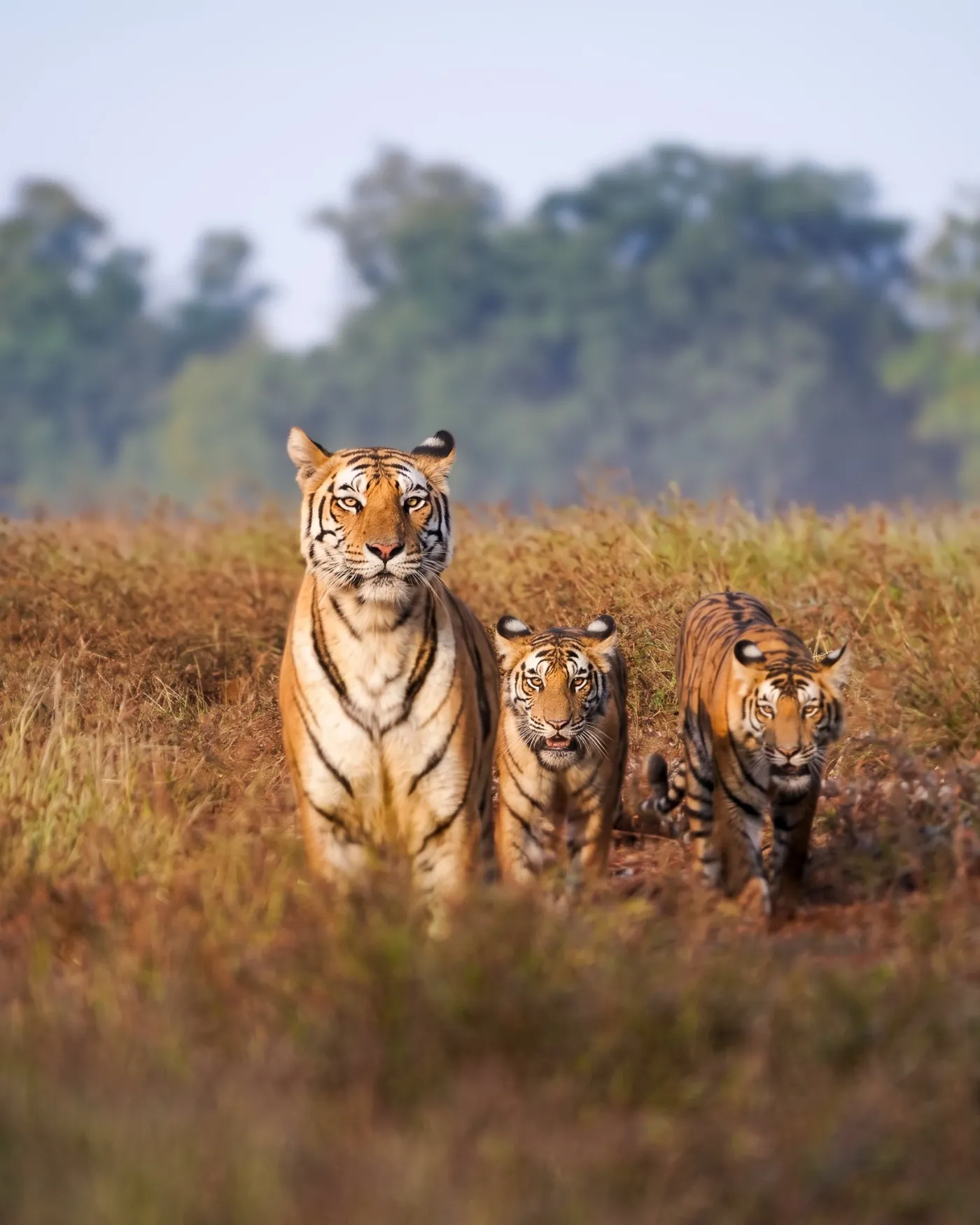
Eight tigers in six drives: the Panna tiger sightings
Six drives. Eight tigers. Four days in one of India's most dramatic tiger landscapes.
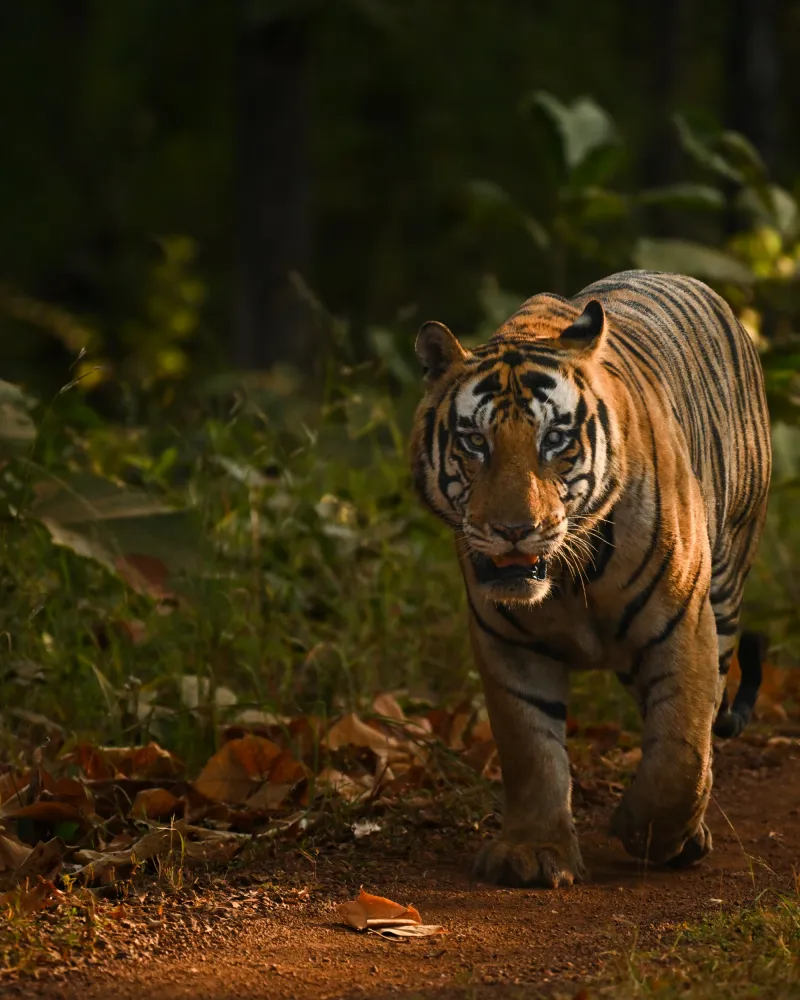
Two dominant males, two generations
The expedition gave us a rare contrast. We photographed a powerful male of the present generation, in his prime and commanding his territory, and an older male who is proof that old is gold. His experience and presence in the frame were unmistakable.
Photographing both on the same expedition gave us portraits of two very different characters, set in green forest and early morning golden light.
A tigress and her three cubs
The sighting of the expedition. We spent time with a tigress and her three curious, playful cubs, with sibling interaction, tender maternal moments and action all unfolding in front of us.
Two tigresses, two separate encounters
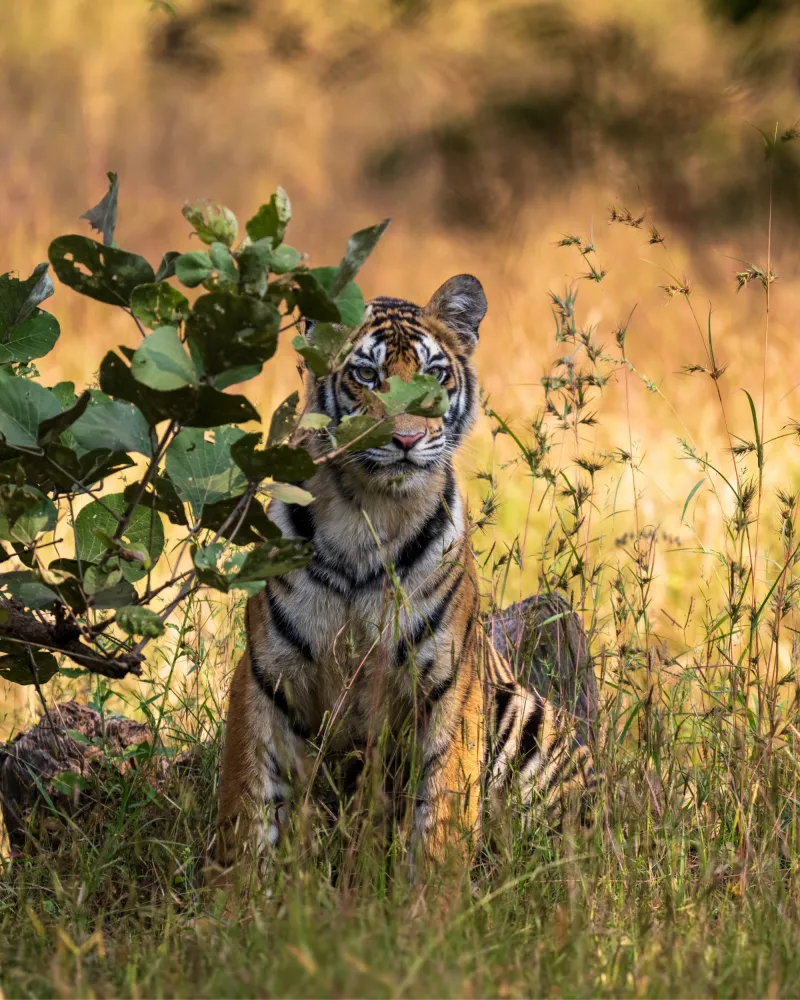
On one drive, we found a tigress observing her territory near a waterhole, calm and watchful. On another, we followed a tigress on the move, looking for prey for her newborn cubs.
Two different days, two very different moods, and each gave us frames the other never could.
| Sighting | Tigers | What it gave the frame |
|---|---|---|
| Male, present generation | 1 | A prime-age portrait of an animal commanding his territory |
| Older male | 1 | A character portrait: experience and presence in the frame |
| Tigress with three cubs | 4 | Sibling interaction, maternal moments and action |
| Tigress near a waterhole | 1 | A calm, watchful animal surveying her territory |
| Tigress on the move | 1 | Movement, as she looked for prey for her newborn cubs |
| Total | 8 | Six drives over four days |
Beyond the big cats: raptors, finches and prey species
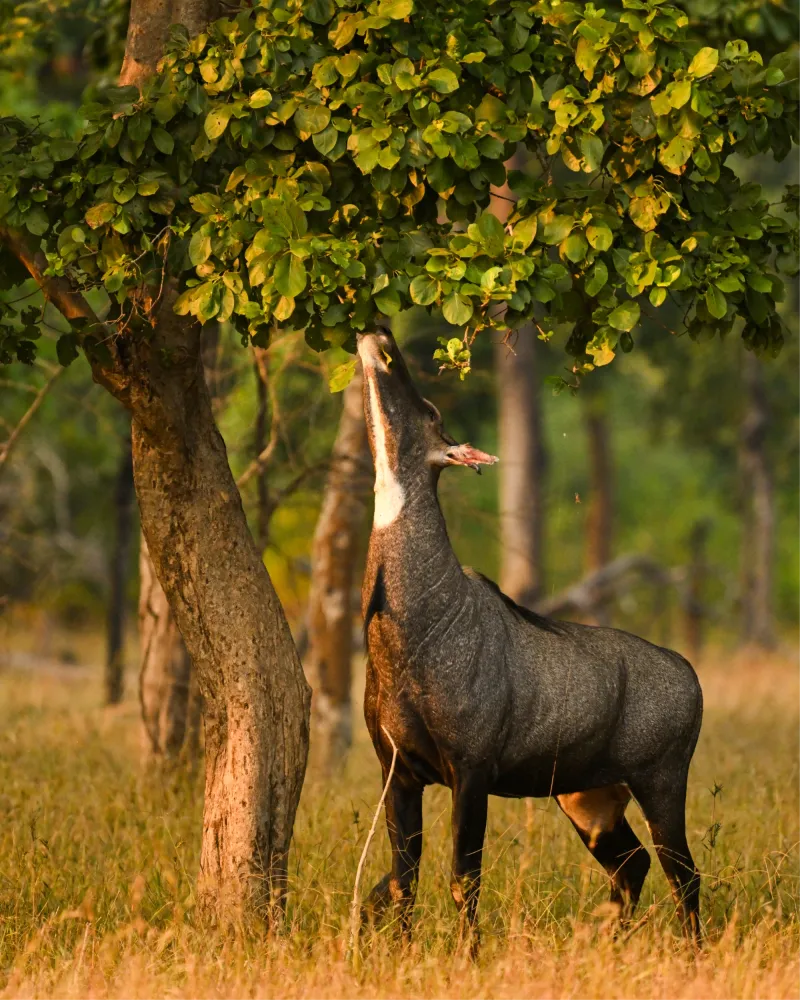
The reserve rewarded us with a crested serpent eagle in flight and on its perch, the common rosefinch against winter foliage, and regular encounters with sambar, chital, nilgai and langurs.
What a mentored photography workshop in Panna covers
The sightings were only half the expedition. On every drive our mentor worked alongside each photographer, in real time and in the moment.
- Low light and action: tracking cubs and raptors with the right shutter speeds and focus settings.
- Composition and fieldcraft: using Panna's canyons, water and natural frames to tell a story, not just record a sighting.
- Ethical photography: reading animal behavior, keeping a respectful distance, and knowing when to put the camera down.
- Evening sessions: image critiques, raw processing, color grading and building a cohesive portfolio from the day's work.
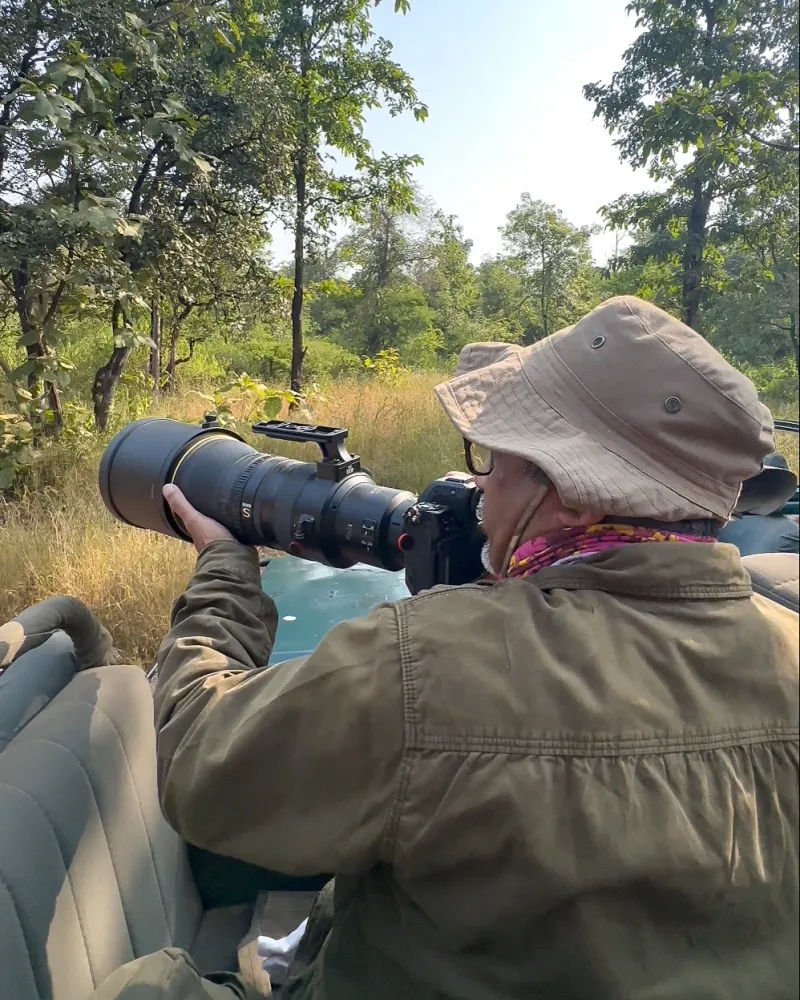
The settings behind the frames in this report
The frames below were made on a Nikon Z 9 with the NIKKOR Z 180-600mm f/5.6-6.3 VR, at 560-600mm and f/6.3. The numbers show how far Panna's light moves within a single morning.
| Frame | Date and camera time | Focal length | Shutter | Aperture | ISO |
|---|---|---|---|---|---|
| Tiger on the forest track (lead image) | Oct 24, 06:18 | 560mm | 1/200 s | f/6.3 | 3,200 |
| Nilgai browsing | Oct 24, 16:55 | 600mm | 1/1000 s | f/6.3 | 3,200 |
| Tiger on the red-earth track | Oct 25, 07:41 | 600mm | 1/2500 s | f/6.3 | 3,200 |
| Sunrise over the tree line | Oct 26, 06:42 | 600mm | 1/10000 s | f/6.3 | 320 |
| Young tiger behind leaves | Oct 26, 09:29 | 600mm | 1/1250 s | f/6.3 | 1,000 |
At 6:18 a.m. a walking tiger was shot at 1/200 s and ISO 3200. At 7:41 a.m. the next day, the same ISO gave 1/2500 s. Times are from the camera clock.
Why a group of three in one zone worked
With only three photographers and one mentor, every guest had personal attention on every drive.
The same exclusive vehicle, the same naturalist and the same safari zone throughout let us learn the terrain, understand the animals' movements and put ourselves in the right place at the right time. That is what we mean by going beyond the safari.
A note of thanks
Our sincere thanks to the Madhya Pradesh Forest Department, our naturalists and drivers, and above all the three photographers who joined us and pushed their craft further.
Panna Tiger Reserve trip report: the departure at a glance
| Detail | This departure |
|---|---|
| Location | Panna Tiger Reserve, Madhya Pradesh, India |
| Dates | Oct 23-26, 2026 |
| Duration | 3 nights, 4 days |
| Drives | 6, in one exclusive vehicle |
| Group | 3 photographers, 1 mentor |
| Zone | The same safari zone on every drive |
| Tigers photographed | 8 |
| Also seen | Crested serpent eagle, common rosefinch, sambar, chital, nilgai, langurs |
Frequently asked questions
How many tigers did the October 2026 Panna Tiger Reserve trip see?
Eight. Over six drives between Oct 23 and 26, 2026, a WYLD group of three photographers and one mentor photographed two dominant males of different generations, a tigress with three cubs, and two other tigresses on separate drives, one near a waterhole and one moving through her territory looking for prey.
What does Panna Tiger Reserve look like for wildlife photography?
Panna Tiger Reserve in Madhya Pradesh, India, is not classic dense jungle. It is gorges, teak plateaus, open grasslands and waterfalls along the Ken River. For photographers that variety is the advantage: each drive gives a different backdrop and a different quality of light, so the same species produces very different frames.
Did Panna Tiger Reserve lose its tigers?
Yes. Panna Tiger Reserve in Madhya Pradesh, India, lost its tigers entirely in 2009. A reintroduction and protection effort brought them back. In October 2026, a three-photographer WYLD workshop recorded eight tigers in four days there, including a tigress with three cubs and two dominant males of different generations.
What happens on a mentored wildlife photography workshop in Panna?
On the October 2026 Panna workshop, three photographers shared one exclusive vehicle, one naturalist and one safari zone for six drives, with a mentor coaching in the field on low light, action, composition and ethical distance. Evening sessions covered image critiques, raw processing, color grading and building a portfolio from the day's work.
What camera settings were used for the Panna tiger photographs in this report?
The frames with camera data were made on a Nikon Z 9 with the NIKKOR Z 180-600mm f/5.6-6.3 VR at 560-600mm and f/6.3. A tiger walking at 6:18 a.m. was shot at 1/200 s and ISO 3200. At 7:41 a.m. the next day, ISO 3200 gave 1/2500 s.
Photograph Panna with us
The full itinerary, dates and what the days actually look like are on the Panna photography workshop expedition page. For how the in-field teaching runs, see wildlife mentorship workshops, and for every upcoming departure, see the dates on the expedition calendar.
